 simpcity
 Exhibition display design has changed in subtle ways over the past decade.
Not dramatically. Quietly.
The most visible shift has not been graphics or colour. It has been structure.
Rigid boards, heavy panel systems, and permanent fixtures once defined exhibition environments. Today, those systems increasingly give way to SEG fabric display solutions that behave differently in real spaces.
At first glance the difference seems technical. Aluminium frames instead of panel boards. Fabric graphics instead of laminated prints. Silicone edges replacing traditional mounting methods.
But the deeper change is behavioural.
Modern SEG fabric displays respond better to the way exhibitions actually function — temporary environments built under time pressure, installed repeatedly, and adjusted constantly.
This is why SEG fabric display systems are gradually replacing older exhibition structures across retail installations, trade shows, and promotional environments.
The shift is less about novelty and more about practicality.
Why Exhibition Displays Must Adapt to Repeated Use
Exhibition displays rarely live quiet lives.
They are packed, transported, unpacked, assembled, dismantled, and transported again. Sometimes dozens of times each year.
Rigid display systems were never designed with this rhythm in mind. Panels chip. Surfaces scratch. Structural pieces become misaligned over time.
A seg fabric display behaves differently because the graphic and the structure operate independently.
The frame provides stability.
The fabric graphic provides the visual surface.
If graphics change — which they frequently do — the system does not need rebuilding. The display simply receives new fabric artwork while the structure remains in place.
This separation is one of the reasons seg fabric displays have become so common in modern exhibitions.
Understanding How SEG Fabric Display Systems Work
A seg fabric display system uses a fabric graphic with a silicone edge sewn around its perimeter.
This silicone edge slides neatly into a recessed channel inside an aluminium frame.
Once inserted, the fabric becomes tensioned across the structure. The result is a smooth, flat display surface without visible fixings.
Unlike traditional fabric displays that wrap around frames, a seg fabric frame display holds the graphic within the structure itself. This creates sharper edges and a more controlled visual finish.
The approach also simplifies graphic replacement.
Removing and installing graphics becomes a straightforward task rather than a structural process.
This flexibility explains why seg fabric display systems are widely used in environments where branding changes frequently.
Why Backlighting Has Accelerated the Growth of SEG Displays
Lighting has always influenced exhibition design.
But modern LED technology has made illumination easier to control and more energy efficient.
This has led to a rapid increase in seg backlit fabric displays.
When fabric graphics are illuminated from behind, colours appear deeper and imagery becomes more visible across crowded exhibition halls. The light spreads evenly through the fabric surface, creating a soft glow rather than harsh hotspots.
Backlit graphics attract attention naturally without relying on excessive colour or aggressive design.
This balance is why seg backlit fabric displays are now common in retail environments as well as exhibitions.
They provide visual impact while remaining visually calm.
Portable Systems and the Rise of Flexible Exhibition Displays
Exhibitions rarely stay in one place.
Companies attend multiple events across different cities, venues, and stand sizes. Display systems that cannot adapt to these variations quickly become impractical.
A foldable seg fabric display stand addresses this challenge directly.
Frames collapse or break down into manageable sections, allowing transport without heavy equipment or complex logistics.
For exhibitors travelling frequently, portability is not a luxury — it is a necessity.
Portable structures also reduce installation time.
Teams working under tight exhibition schedules can assemble displays quickly without specialist tools.
Because of this practicality, the foldable seg fabric display stand has become one of the most widely adopted display structures in recent exhibition environments.
Portable Lighting and Fabric Lightbox Displays
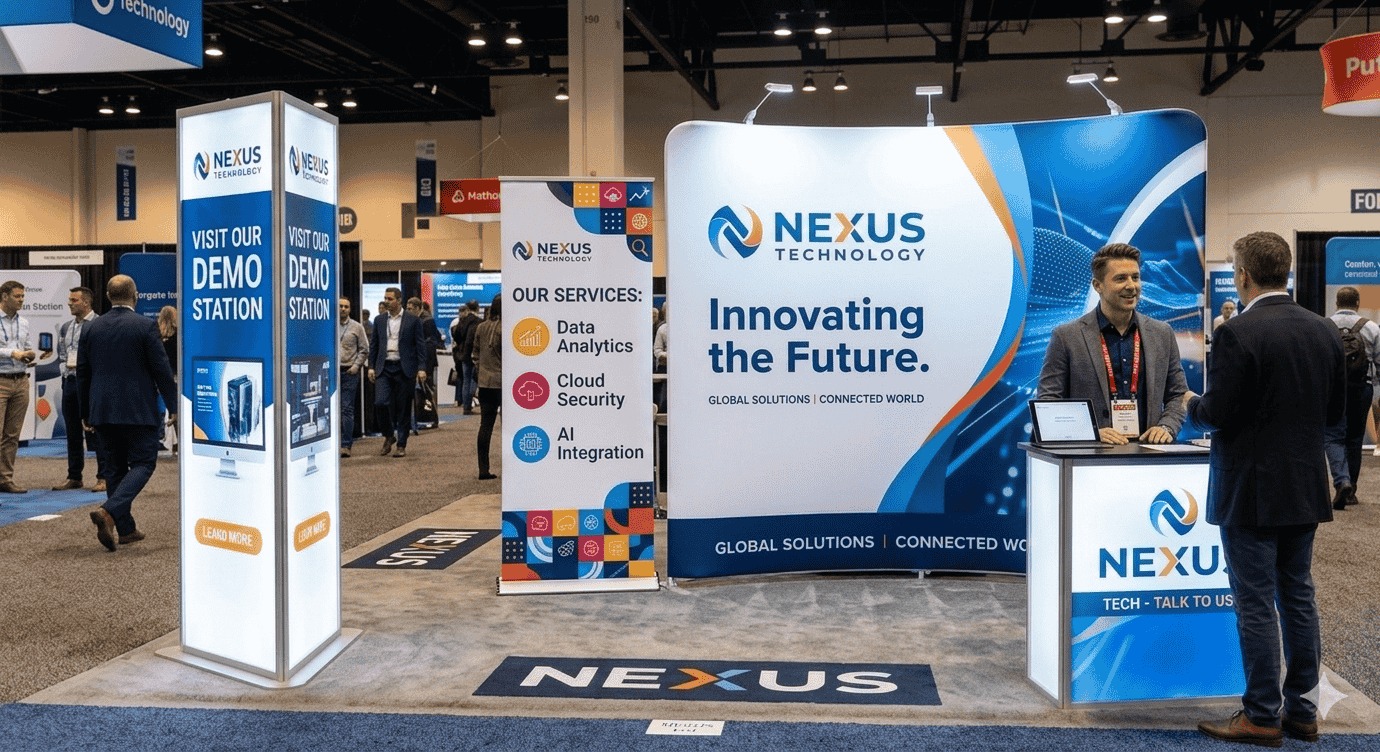
Lighting systems once required complicated electrical installation.
Today, lightweight LED frames have simplified illuminated displays significantly.
A portable seg fabric lightbox display combines the visual impact of backlighting with the flexibility of modular frames. The display can be transported, assembled, and illuminated with minimal setup.
Unlike traditional illuminated signage, these systems remain manageable for exhibition teams working under tight schedules.
The ability to assemble a portable seg fabric lightbox display without specialist installation has made backlit displays far more accessible to exhibitors of all sizes.
Why Structural Simplicity Often Outperforms Visual Complexity
Exhibition environments are rarely controlled spaces.
Lighting conditions vary across halls. Visitor traffic changes throughout the day. Stand layouts shift slightly during installation. Under these conditions, complex structures often become fragile.
A well-designed seg fabric display focuses on structural clarity rather than visual complexity.
Clean lines.
Consistent tension.
Reliable assembly.
This simplicity reduces the risk of installation problems and ensures that displays perform predictably even when exhibition conditions are less than ideal.
In practice, displays that look straightforward often function far more effectively than elaborate structures.
How SEG Fabric Frame Displays Support Modular Design
Exhibitions rarely repeat the exact same layout twice.
Stand dimensions change. Entry points move. Neighbouring displays influence visibility.
Rigid display systems struggle to adapt to these variations.
A modular seg fabric frame display allows exhibitors to reconfigure structures depending on available space. Frames connect in multiple orientations, creating different display arrangements without replacing the entire system.
This flexibility allows a single display system to support multiple exhibition environments.
For organisations attending numerous events each year, this adaptability becomes a significant advantage.
Comparing Exhibition Display Structures
| Display Structure | Transport Flexibility | Graphic Replacement | Visual Finish | Adaptability |
| Rigid panel systems | Limited | Difficult | Moderate | Low |
| Traditional fabric displays | Moderate | Moderate | Good | Medium |
| SEG fabric displays | High | Very easy | Excellent | High |
This comparison explains why seg fabric display systems have grown steadily across exhibitions and retail installations.
The improvement lies less in appearance and more in usability.
Why Exhibition Graphics Must Change More Frequently
Marketing campaigns rarely remain static.
Product launches, seasonal promotions, and messaging updates require new graphics across display environments. Systems that make these changes difficult create unnecessary friction.
With seg fabric displays, the graphic becomes the only element that needs replacing.
The frame remains constant.
This separation reduces production costs and simplifies updates across exhibitions, retail installations, and brand activations.
It also allows brands to refresh displays more frequently without rebuilding their structures entirely.
The Quiet Advantage of Lightweight Structures
Exhibition logistics involve more than design.
Shipping costs, storage requirements, and installation time all influence how practical a display system becomes over time.
Because seg fabric display systems rely on lightweight aluminium frames and fabric graphics, they reduce these operational burdens significantly.
Transport becomes easier.
Storage occupies less space.
Installation requires fewer people.
These advantages rarely appear in design renderings, but they shape real exhibition experiences.
Why Backlit Fabric Displays Continue to Grow
Lighting has always drawn attention in busy environments.
But illumination must be controlled carefully.
Overly bright displays can overwhelm neighbouring stands. Underlit displays disappear in crowded halls.
A well-designed seg backlit fabric display balances visibility with comfort.
Light spreads evenly through the fabric surface, allowing graphics to appear bright without becoming visually aggressive.
This controlled illumination explains why seg backlit fabric displays are widely used in retail windows, exhibition stands, and interior branding environments.
When Portable Displays Become Long-Term Systems
Portable exhibition displays are sometimes misunderstood as temporary solutions.
In reality, many organisations rely on portable structures as long-term display systems.
Because graphics can change easily, the structure remains relevant across multiple campaigns and events.
A foldable seg fabric display stand or portable seg fabric lightbox display may travel frequently, but the frame itself often remains in service for years.
This durability makes modular display systems economically practical as well as visually flexible.
Final Perspective
Exhibition environments are unpredictable by nature.
Displays must be installed quickly, adjusted easily, and transported repeatedly.
Rigid systems designed for static environments rarely adapt well to this reality.
SEG fabric displays succeed because they accept movement and change as part of exhibition life. Their lightweight frames, replaceable graphics, and modular structures allow brands to update messaging, adapt layouts, and maintain visual consistency without rebuilding entire display systems.
Whether used as a seg fabric frame display, a foldable seg fabric display stand, or a portable seg fabric lightbox display, these systems reflect a broader shift in exhibition design one that prioritises flexibility, practicality, and clarity over rigid permanence.
This practical approach explains why seg fabric display systems and seg backlit fabric displays continue to expand across modern exhibition and retail environments, supporting brands that need displays capable of evolving as quickly as the spaces in which they appear.
If you want more information simply visit I You Print.
For the latest updates and information, keep checking SimpCity.